
The great scam churn
And scam investigations everywhere!
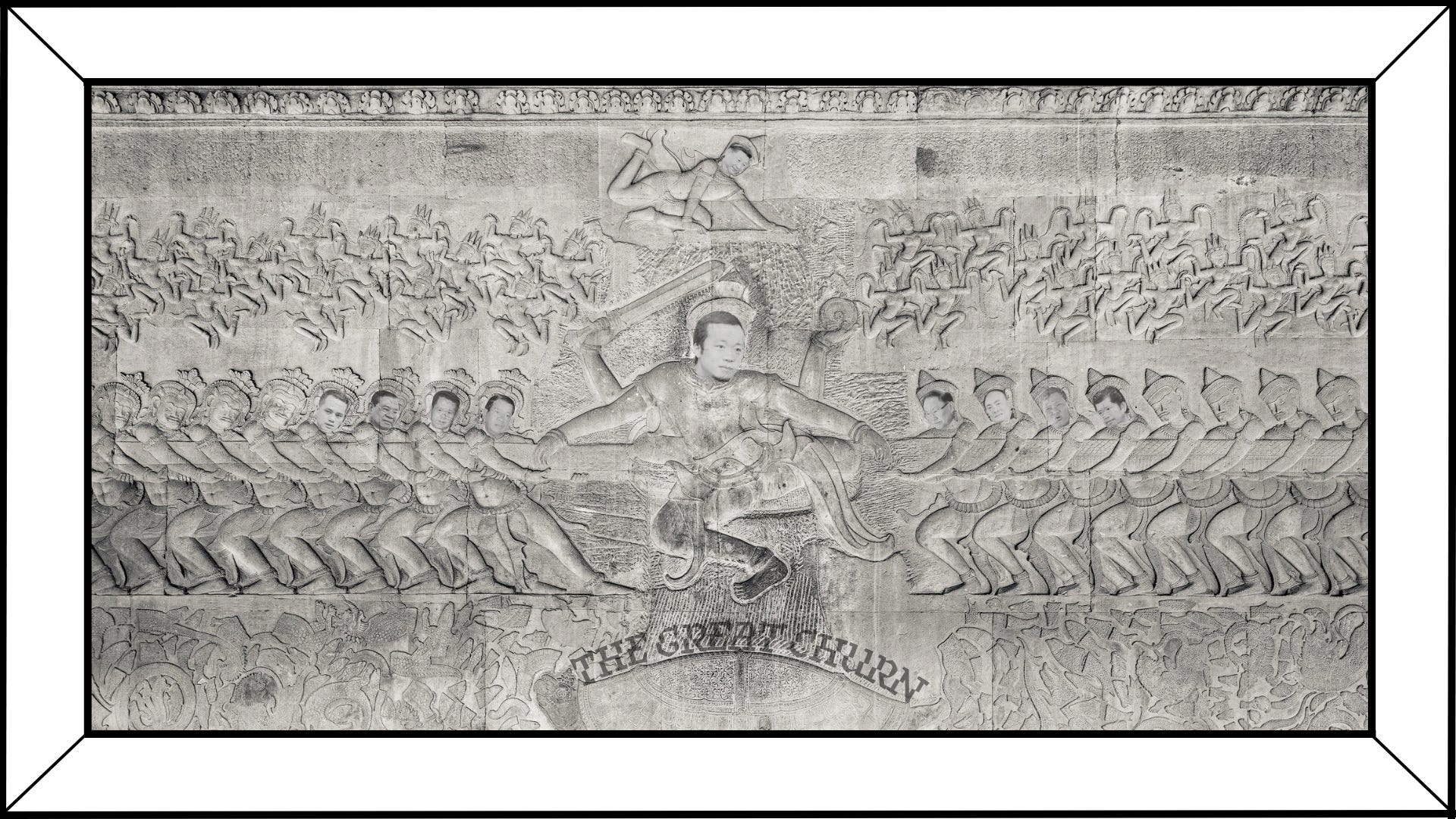
A rumble is afoot after Chen Zhi’s arrest. And by rumble, we mean a mass overturning of scam compounds, a lot of displaced workers wandering the streets, and the arrests of lower-level government officials and tycoons. Fear not, we’ve pulled out Kouprey’s tiniest violin for the occasion.
From Sihanoukville to Poipet to Chrey Thom, scam workers flooded the streets on foot, hopped into buses and were shuffled onto vans. Hundreds of people lugging suitcases wandered down the Bokor mountain scam site in Kampot province, while taxis hovered near casinos and police officers set up shop in Koh Kong to “maintain security and safety” (does someone smell bribes?)
Some sites put up signs in Chinese telling workers they were “free” to go, while we have also seen documents from property management companies ordering scam companies to leave. Other videos circulating on social media showed scenes of unadulterated chaos at compounds Kouprey could not immediately verify, including people jumping over a wall to sprint away.
“I’m so tired of moving,” one scam operator complained on a popular Telegram channel, explaining that he had relocated his company three times since evading the Myanmar crackdowns in November.
“To all my brothers in Cambodia, don’t blindly move now. There’s nowhere safe in Cambodia. Is there anywhere left to live in Cambodia? The only option is to go back to China and farm,” he lamented.
(Head to the social media accounts for CyberScamMonitor and Mekong Independent for more videos and images showing chaos at scam compounds across the country. Our Substack overlords make it hard to embed videos on here, urgh.)
In Phnom Penh, the shuffle has created an overnight migrant crisis. Around 1,000 Indonesians pooled outside the embassy this week, seeking flights home, while we also heard reports of Chinese laborers sleeping outside the embassy in Toul Tom Poung.
Although Indonesia and China have historically been among the most responsive to repatriating citizens, many other scam workers remain stuck in detention for months. Cambodian law allows those who violate immigration laws to remain in detention for up to three months, and many embassies — especially African countries — don’t have the funds or coordination abilities to perform swift repatriations. Neither does Cambodia have immigration facilities, which were already overburdened prior to this exodus, to house thousands of people, while NGO anti-trafficking victims safe houses have very limited capacity.
Of course, others were back on the hunt for new jobs, with one Bangladeshi man telling a reporter as he fled a Sihanoukville casino: “Our Chinese company is letting us go. But it’s okay, there are plenty of other job opportunities.” Indeed, at least one company seemed willing to take in the strays, with a sign claiming “free access.”
It isn’t clear how much of this is the result of coordinated Cambodia-China raids or more generalized chaos based on word-of-mouth threats and the potential crumbling — or at least recalibration — of Prince Group’s scam ecosystem. It seems closer to the latter, because neither country has publicized major arrests, though they have performed sporadic raids.
The Cambodian government has moved to punish at least two people of note, however. The first is Lieutenant General Sok Ly Huot, a deputy director general at the Immigration Department, who Prime Minister Hun Manet demoted without much public explanation. A Ministry of Interior spokesman said Sok Ly had acted “contrary to the discipline of national police officers” and that “his own private affairs, his own family affairs … affects the work of the organization and the organization’s discipline.”
We’d guess it’s probably not just that. Earlier this week, Cambodian Foreign Minister Prak Sokhonn told Reuters that Chen Zhi’s Cambodian nationality was “not legally obtained,” prompting the extradition to China. Chen has held citizenship since 2014, well before a number of other scamlords also went on to gain it. Aside from this being a hilariously thin cover, given that Chen was deep in Cambodia’s elite as a neak oknha and has been pictured with, you know, Hun Sen, it tracks that the government would have to remove a senior immigration official after such a claim. But to claim that he was an “illegal” citizen hoodwinking the country’s top brass is preposterous.
The second is Li Kuong, a casino tycoon who was detained over alleged fraud, human trafficking and money laundering. Li is owner of an alleged scam compound Majestic Two casino, also known as Huang Le, that was covered in a BBC documentary and a VOA report, among others. He was chairman of the board of Big House Commercial Corporation, which owns Majestic Two, according to commerce and casino license records.
We don’t know why Li specifically was targeted, but this is a typical Cambodian government playbook: Arrest or punish people who have already fallen out of favor with the regime and pin wrongdoing on them, while virtually all the bigger fish — Notorious LYP, K*k An, H*n T* — carry on as usual, doing exactly the same things (and probably consolidating and making more money) than the littler guys. It’s tough out there, being a medium-tier scamlord.
And now for the news:
— The scam exodus reaches even remote compounds. Mekong Independent also collaborated on an investigation looking into documents found at a South Korean scam operator.
— Displaced families are slowly returning to their homes following the December conflict.
— A prominent Australian barrister, who runs a children’s charity, was arrested upon his return home for possessing “child abuse material.”
— Phnom Penh Military Police raided a house selling vapes to students and seized more than 300,000 vapes and accessories.
— 75 people, including Pakistanis, Bangladeshis and Indians, were arrested on suspicion of committing online scams in provinces and escaping to live in Phnom Penh.
— The Svay Rieng Provincial Administration pledged to take action against building owners who hide technology fraud groups. Sure.
— Chhang Youk, the well-known director of the Documentation Center of Cambodia (DC-Cam) for remembering the genocide, has been appointed to the rank of Ambassador to the Royal Cabinet of His Majesty the King, with the rank of Minister.
— Six Stung Treng provincial police officers were removed from their posts and demoted for misconduct. Authorities later said they were accused of illegally allowing people from Laos to enter the country.
— The Child Protection Unit and the Cambodian National Police appealed to the public to provide more information on the murder of a child in Phnom Penh.
— Chea Chantha, leader of the Independent Democracy of Informal Economy Association (IDEA), was released from prison after being arrested and charged with fraud. (Fraud = he attended a workshop discussing climate change and social protections, and later met with workers to tell them about their social security benefits).
— Mother Nature says that tycoon Try Pheap’s son has been mining gold and polluting the Yeyi River in Ratanakiri province. The company quickly denied the allegations. In November, Mongabay had a similar story on toxic runoff from gold mining operations in the province.
— OCCRP released investigations on Cambodia-based Lixin Group, which is allegedly linked to cyber fraud and drug trafficking, and a Taiwanese-born drug trafficker, again with links to Lixin.